
The Teacher Educator Competency Framework
Defining professional standards for teacher educators in Cambodia
This framework is in development. Content below represents current planning
We are developing TDSO’s Teacher Educator Competency Framework to provide clear standards for teacher educator performance and structured pathways for professional growth. This comprehensive framework addresses Cambodia’s urgent need for skilled teacher educators who can drive systemic transformation.
Framework Foundation
The framework is built on TDSO’s three core elements:
In-Service Development.
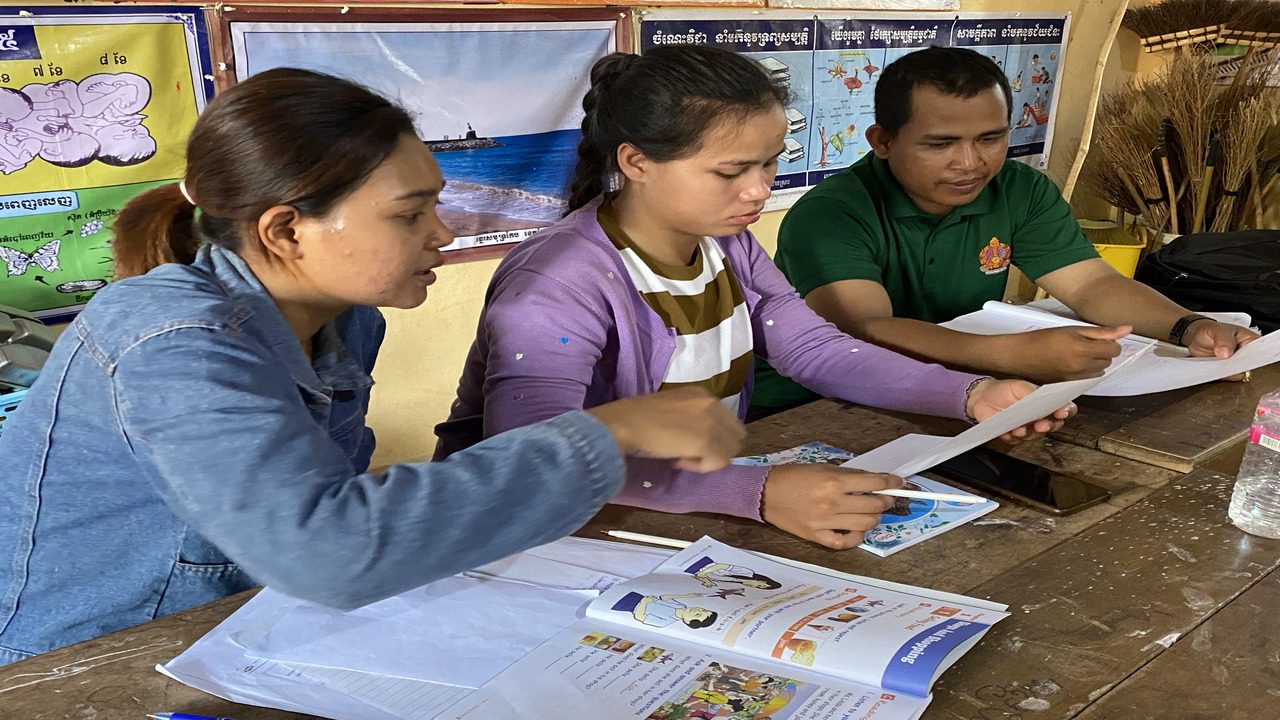
Recognising Cambodia’s need for immediate impact, the framework addresses the professional development needs of practising teacher educators whilst they continue in their roles. This ensures immediate application of learning and sustained impact across the education system.
CLT Methodology.
Teacher educators learn to model and facilitate Communicative Language Teaching approaches,student-centred interaction, practice-based learning, and systematic progression. This provides them with proven, research-backed methodology for developing English teachers effectively.
Transferable Pedagogical Approaches (TPA).
As teacher educators master CLT methodology, they discover these approaches strengthen professional development across all subjects. The facilitation techniques, coaching methods, and systematic progression that work for English teacher development prove equally effective when training mathematics, science, and social studies teachers.
Framework Structure
TDSO is basing the framework primarily on the British Council’s internationally recognised Continuing Professional Development Framework for Teacher Educators, enhanced with three critical components addressing Cambodia’s specific context:
- Transferable Pedagogic Approaches (TPA): Explicitly developed as a core professional practice
- Working in Limited Resource Contexts: Practical constraints including overcrowding, immovable furniture, and limited materials
- Digital Transformation and AI in Education: Cambodia’s strategic opportunity for digital leapfrogging
The 14 Professional Practices
The framework encompasses 14 interconnected professional practices organised under three headings:
Knowledge-Based Competencies
- Knowing the Subject
- Understanding the Educational Context
- Understanding Transferable Pedagogic Approaches
- Understanding Teacher Learning
Skills for Effective Teacher Education
- Planning Teacher Learning
- Managing Teacher Learning
- Evaluating Teacher Competence
- Supporting Ongoing Teacher Professional Development
- Working in Resource-Constrained Contexts
- Adopting Inclusive Practices
- Digital Transformation and AI in Education
- Supporting Remote Learning
Approaches to Professional Development
- Taking Responsibility for Own Professional Development
- Contributing to the Profession
Development Stages
The framework identifies four stages of development:
- Foundation: Building basic competencies
- Engagement: Applying competencies in practice
- Integration: Connecting competencies across contexts
- Specialisation: Advanced expertise and leadership
This staged approach acknowledges that professional development is not linear and that individuals develop different skills at different points in their careers.