
Our Approach
Evidence-based methodology for systematic teacher development
TDSO’s approach to teacher professional development is built on three interconnected elements that distinguish our work and drive sustainable impact.
First, we work with practising teachers rather than pre-service trainees. This in-service focus allows us to build on real classroom experience, address immediate teaching challenges, and provide skills that teachers apply directly with their students.
Second, we employ Communicative Language Teaching (CLT),a research-backed methodology that revolutionised language education globally. CLT requires student interaction, practice-based learning, and meaningful communication, making the learning process completely visible and actively engaging students.
Together, these three elements create the practice-based professional development that transforms teaching quality and improves student learning outcomes across Cambodia’s education system.
Why In-Service Teacher Development ?
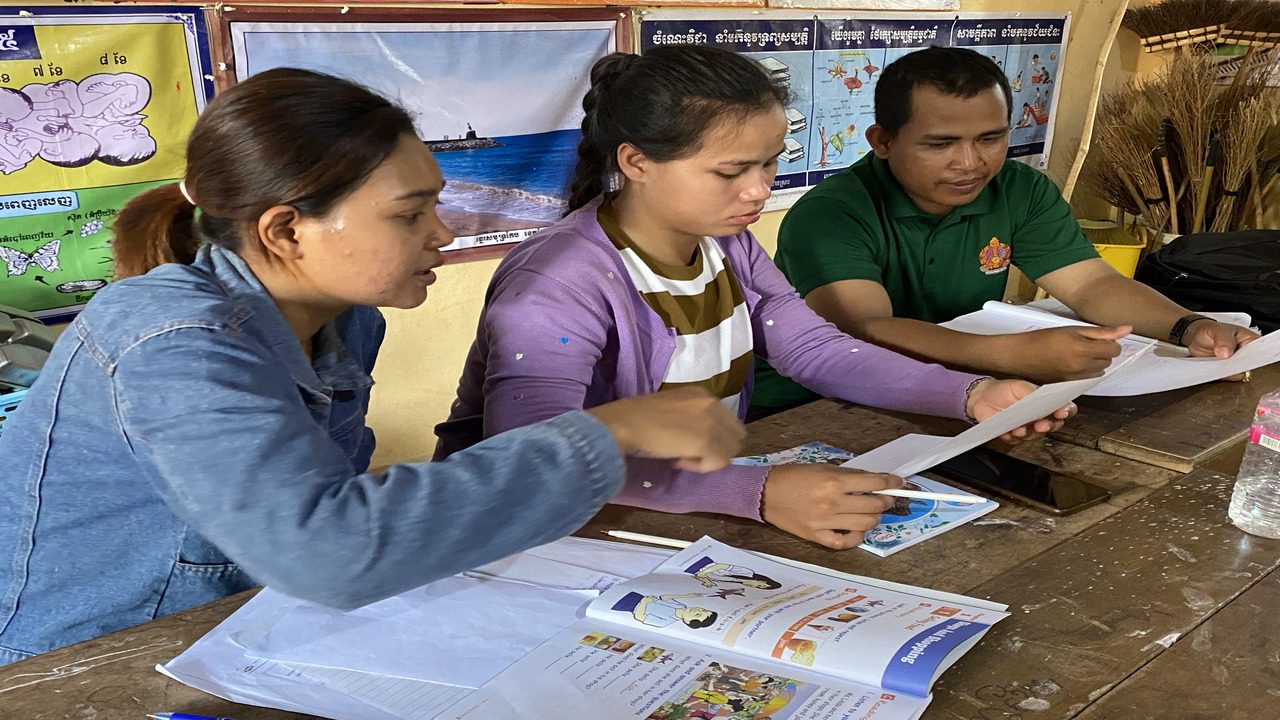
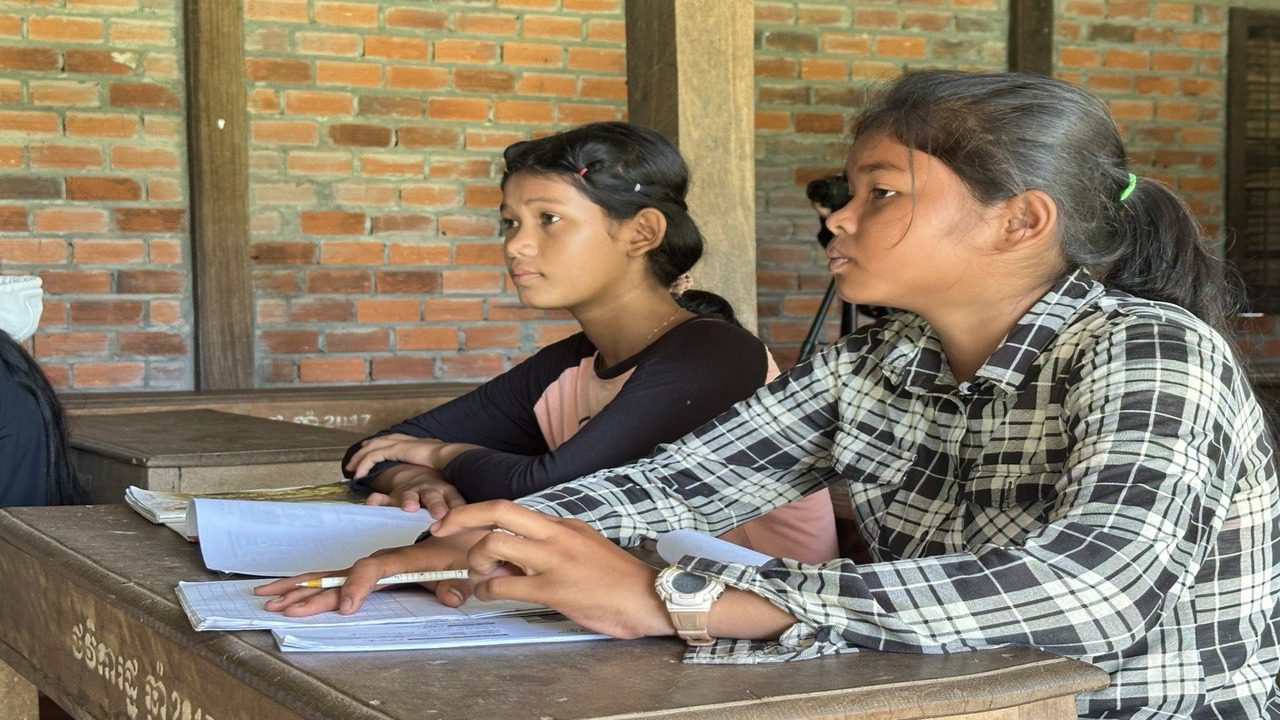
TDSO works with practising teachers in Cambodia’s public schools. This strategic focus on in-service professional development, rather than pre-service teacher education, reflects where the greatest impact on student learning can be achieved.
Unlike pre-service training, which prepares future teachers before they enter classrooms, in-service development works with teachers who are already teaching. This creates fundamentally different opportunities for effective professional growth.
The In-Service Advantage
Immediate Classroom Impact
Teachers apply new approaches directly in their current classes, improving student learning outcomes immediately.
Existing Teaching Context
Professional development addresses real challenges teachers face daily in their actual classrooms.
Adult Learners with Experience
In-service teachers bring classroom experience enabling more sophisticated professional dialogue and faster skill development.
School-Based Support Systems
Teachers work in established schools with colleagues and leadership structures, enabling peer learning and collaborative problem-solving.
Sustained Follow-Up Possible
Professional development can include classroom coaching, observation, and long-term mentoring.
System Integration
Working with practicing teachers allows direct integration with government education structures, creating systemic change.
Communicative Language Teaching (CLT)
Our Foundation in Proven Pedagogy
TDSO employs Communicative Language Teaching (CLT) as our core methodology for English teacher training. CLT is a research-backed approach that transformed language education globally, shifting from rote memorisation and grammar drills to student-centred interaction and meaningful communication.
We selected CLT as our foundation because it makes the learning process completely visible and requires practice-based approaches. Unlike subjects where learning can remain hidden, language teaching demands active student participation, immediate practice, and real-world application. These requirements created teaching methods that prove effective across all subjects, the foundation from which our TPA framework emerged.
CLT’s transformative power lies in its core principles. Teachers learn to facilitate student interaction rather than lecture, create practice opportunities rather than assign memorisation, and build systematic progression through
communicative tasks. These approaches don’t just improve English teaching; they transform how teachers think about learning itself.
Core CLT Principles
Student-Centered Interaction
CLT shifts the classroom from teacher monologue to student dialogue. Teachers facilitate communication rather than transmit information, creating environments where students actively construct understanding through interaction with peers and content.
Practice-Based Learning
Students learn by doing, not by memorizing rules. CLT creates opportunities for meaningful practice with immediate application, developing skills through use rather than abstract study.
Meaningful Communication
Language learning focuses on conveying meaning, not perfect form. Students engage in authentic communication tasks that mirror real-world use, making learning relevant and purposeful.
Real-World Application
CLT connects classroom activities to students' lives and needs. Tasks reflect actual communication situations, ensuring skills transfer beyond the classroom to practical use.
Continuous Feedback and Refinement
Teachers provide ongoing feedback during practice, helping students refine skills progressively. Assessment focuses on communication effectiveness, not error counting.
Evidence-Based Effectiveness
CLT is grounded in decades of research on second language acquisition. Its principles are validated globally across diverse educational contexts, providing proven foundation for teacher development
Transferable Pedagogical Approaches (TPATM)
From English Teaching to All Subjects
As teachers master CLT for English teaching, a powerful insight emerges: the core approaches that make CLT effective—student interaction, practice-based learning, systematic progression—work powerfully across all subjects, not just language learning.
TDSO formalised this recognition as our Transferable Pedagogical Approaches (TPA) framework. TPA extracts the transferable elements from CLT and provides teachers with systematic methods for applying these proven approaches throughout their teaching practice.
This is TDSO’s key innovation: recognising that effective language-teaching principles are, in fact, effective learning principles. Teachers don’t just improve their English instruction, they transform their entire approach to
teaching, applying student-centred, practice-based methods across all subjects.
The TPA framework provides structure for this transfer, ensuring teachers apply approaches with fidelity while adapting to subject-specific contexts. What works in English classrooms proves equally powerful in mathematics, science, social studies, and beyond.
Six Core TPA Principles
Practice-Based Learning
Teachers learn by doing, not just listening to theory. Professional development includes actual classroom practice and immediate application.
Peer Collaboration
Teachers learn from and with each other through structured collaborative activities and professional learning communities.
Systematic Progression
Professional development follows a structured developmental pathway, building skills progressively rather than presenting isolated techniques.
Sustained Support
Teachers receive ongoing coaching and follow-up in their actual classrooms, ensuring new approaches become embedded in regular practice.
Context Relevance
All approaches are adapted specifically for Cambodian public school classrooms whilst maintaining pedagogical rigour.
Evidence-Based Refinement
Continuous research, observation, and feedback ensure the TPA framework evolves based on measured outcomes.